







Financial emergencies can arise unexpectedly, whether it’s a medical expense, urgent travel, home repairs, or managing monthly commitments. In such situations, a personal loan can provide immediate financial support without requiring any collateral.
However, before applying, it is important to understand the personal loan eligibility criteria that lenders use to evaluate your application. Meeting these requirements can improve your chances of faster approval and smoother disbursal.
If you’re looking for quick and convenient borrowing options, downloading a reliable fast cash loan app download solution can simplify the entire process and help you access funds when you need them most.
You may read: ETF vs Mutual Funds: Where Should Indian Investors Put Their Money?
What Is Personal Loan Eligibility?
Personal loan eligibility refers to the set of conditions lenders assess to determine whether an applicant can repay the borrowed amount responsibly. These factors help lenders evaluate creditworthiness and decide the loan amount, interest rate, and repayment tenure.
While eligibility requirements may vary across lenders, the basic criteria remain similar.
Common Personal Loan Eligibility Criteria
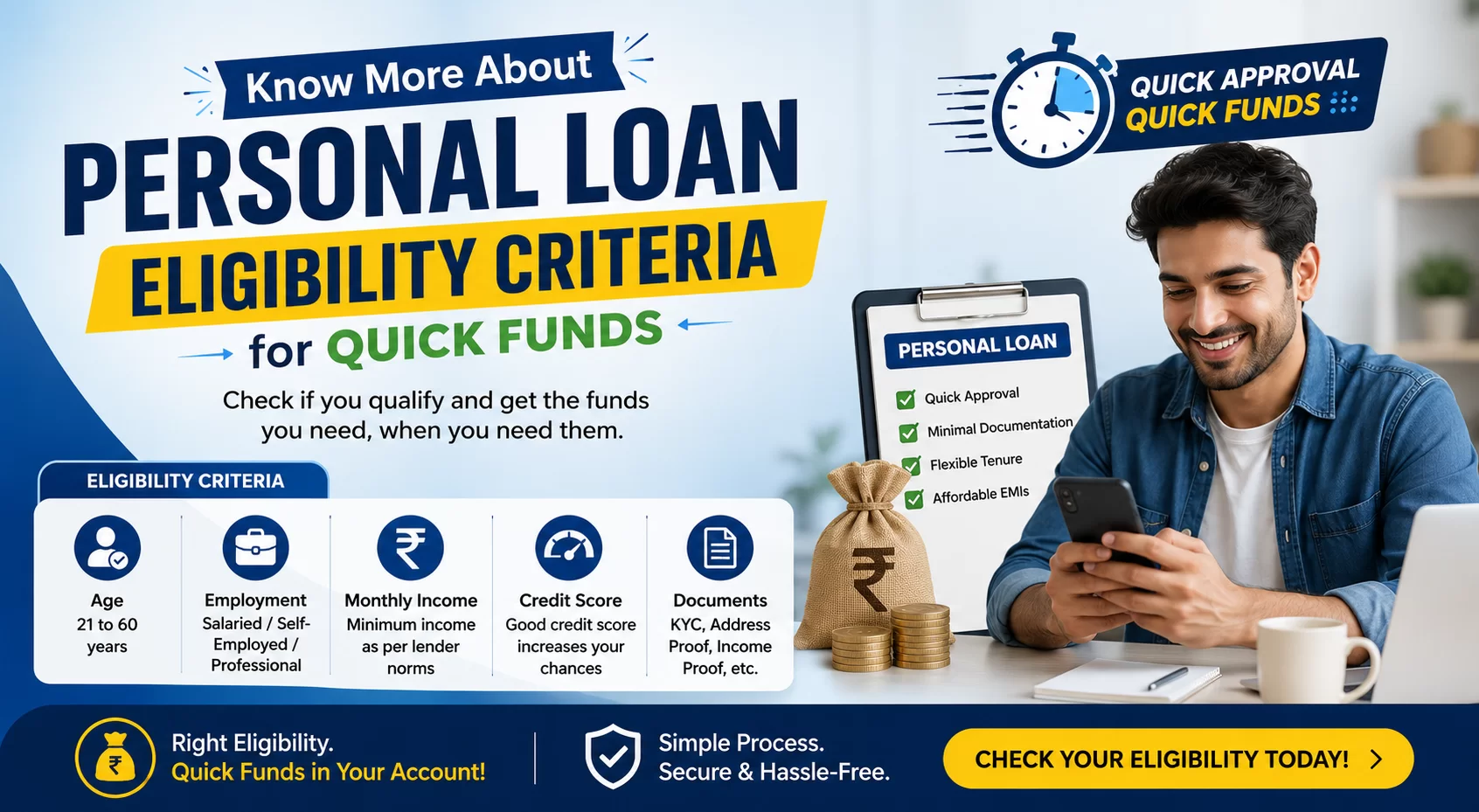
Age
Most lenders prefer applicants between 21 and 58 years of age, although eligibility limits can vary.
Employment Status
Personal loans are generally available to salaried employees, self-employed professionals, and business owners with a stable source of income.
Credit Score
A healthy credit score, typically 700 or above, can increase your chances of approval and access to competitive interest rates.
Existing Financial Obligations
Your ongoing EMIs and debt-to-income ratio play an important role in determining repayment capacity.
Documents Commonly Required
Most lenders ask for the following documents during the application process:
- PAN card and Aadhaar card
- Address proof
- Recent salary slips or income proof
- Bank statements
- Self-employed applicants may need additional business documents
How Digital Personal Loan Disbursal Makes Borrowing Smarter
Modern digital lending platforms have transformed the personal loan application process by making it faster, simpler, and more convenient. Many lenders now offer an end-to-end online experience, allowing eligible borrowers to complete everything from eligibility checks and document submission to loan tracking without visiting a branch.
Common benefits offered by digital personal loan providers include:
- Quick eligibility checks with minimal information
- Paperless documentation and digital verification
- Flexible loan amounts and repayment tenures
- Transparent interest rates and charges
- Instant or quick approvals for eligible applicants
- Fast loan disbursal directly to the borrower’s bank account
- Easy online loan management through websites or mobile apps
These digital features help reduce paperwork, save time, and make borrowing more accessible for individuals who need funds quickly.
Improve Your Personal Loan Eligibility
Here are a few practical ways to improve your chances of loan approval:
- Maintain a good credit score.
- Pay your existing EMIs and credit card bills on time.
- Keep your debt-to-income ratio low.
- Avoid submitting multiple loan applications within a short period.
- Ensure all your documents are accurate and up to date.
- Maintain a stable source of income and employment whenever possible.
Understanding the eligibility criteria before applying helps you choose a suitable lender and increases your chances of faster approval. By comparing loan offers, checking terms carefully, and opting for a reputable digital lender, you can enjoy a smoother borrowing experience with quick access to funds when needed.
Disclaimer: This article is for informational purposes only and should not be considered financial advice. Loan approval, eligibility, interest rates, and repayment terms vary depending on the lender’s policies and the applicant’s financial profile.